


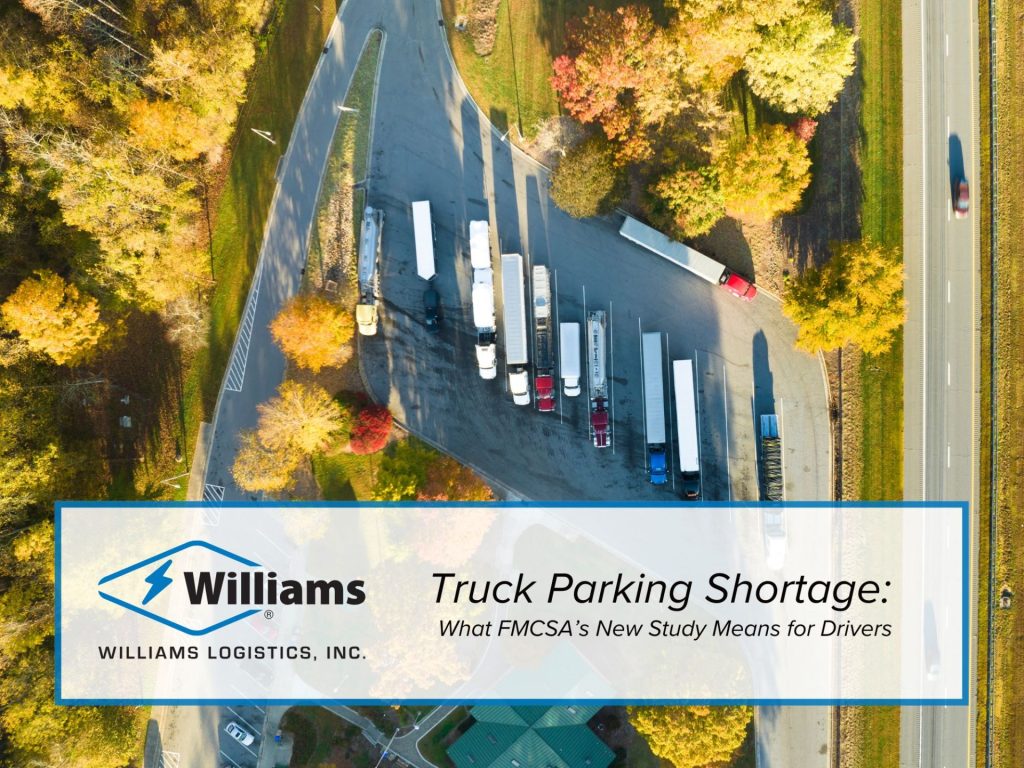
FMCSA is finally putting real numbers behind something truck drivers have known for years: the truck parking shortage is a daily safety and stress problem, not just an inconvenience. A recent study even estimates parking issues are draining roughly $100 billion a year from the trucking industry through wasted time, fuel, and lost productivity. For Williams Logistics drivers, understanding what’s changing—and what can be done in the meantime—matters for both safety and income.
What FMCSA’s new survey is about
FMCSA plans to survey several thousand truck drivers, aiming for about 1,000 complete responses, through a project called “Quantifying the Benefits of Creating New Truck Parking Spaces.” The goal is to measure how much money and safety risk could be saved by adding spaces in different regions, so states and local governments can finally see hard financial justification for building truck parking instead of pushing trucks farther away.
The survey will ask about how often drivers:
- Park in unauthorized or unsafe spots
- Stop driving early just to secure a space
- Drive off route searching for parking
- Push beyond hours-of-service limits trying to find a spot
Those answers will feed into models that show how better parking cuts crashes, lowers carrier costs, and improves driver well‑being.
Why the shortage hits drivers so hard
Federal and state agencies already recognize truck parking shortages as a top industry concern, ranking it near the very top of “critical issues” lists in recent years. The new cost study highlights several ways the shortage hits drivers and fleets:
- Lost drive time when you shut down early to avoid being stranded
- Extra unpaid miles hunting for a space away from the main route
- Increased crash risk when parking on ramps, shoulders, or crowded lots
- Higher stress, worse sleep, and more fatigue the next day
When summed across the national fleet, those individual sacrifices add up to tens of billions of dollars in wasted capacity and cost every year.
Where you can park a semi—realistically
On paper, legal truck and trailer parking includes:
- Public rest areas and turnpike service plazas
- Truck stops and travel centers
- Designated commercial truck parking lots and terminals
- Some industrial zones and customer yards where parking is allowed overnight
In reality, those options are often full by evening in high‑traffic corridors, pushing drivers into:
- Exit ramps and shoulders
- Retail or vacant lots not designed for trucks
- Residential or city streets with unclear rules
These “last resort” locations increase exposure to tickets, towing, theft, and collisions, especially at night.
Practical strategies while the system catches up
Until more parking is actually built, there are concrete steps drivers can take:
- Plan parking, not just routing. When trip‑planning, identify at least two specific parking options for your intended shutdown window instead of relying on whatever appears on the GPS near the end of your hours.
- Shift your driving window when possible. Running slightly earlier or later than the heaviest parking demand on a given corridor can mean the difference between a legal spot and an on‑ramp.
- Use reservation and parking apps wisely. Paid or reserved parking can feel frustrating, but for certain lanes and peak times, locking in a spot can protect your hours and reduce stress.
- Report chronic “parking deserts” to dispatch. Consistent feedback helps carriers advocate for safer routing, adjust appointment times, or support local parking solutions.
- Document parking‑related delays. Clear notes on why you had to shut down early or detour for parking can support internal safety discussions and policy changes.
FMCSA’s new study is a sign that regulators and policymakers are finally treating truck parking as a measurable economic and safety issue, not just driver “complaining.” As that data turns into funding and new capacity, disciplined planning and communication will help Williams Logistics drivers stay safe, legal, and ready to benefit when better parking options arrive.