


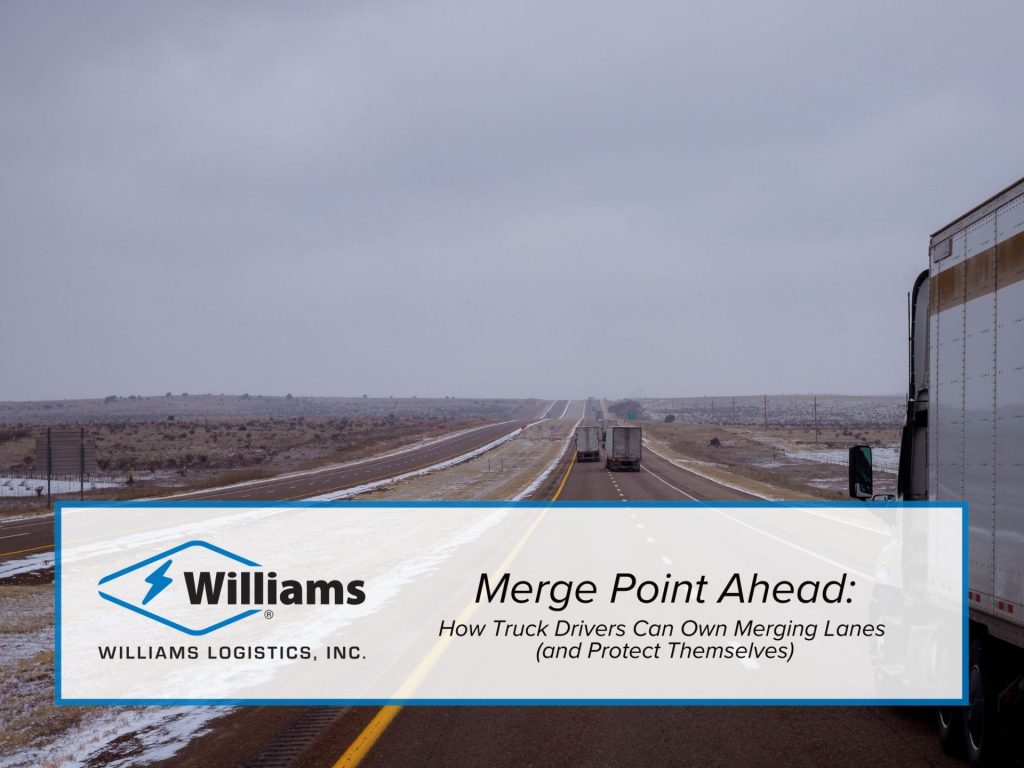
Two‑lane merges into one are some of the most stressful spots on the road for truck drivers. Work zones, lane drops, and “merge point ahead” signs all create a setup where impatient motorists try to race past a semi and squeeze in at the last second. Safety reviews of real crashes show that even when the four‑wheeler is clearly at fault, fleets and investigators often ask whether the truck driver could have anticipated the move and reduced the damage.
This isn’t about blaming truckers. It’s about how professionals can use defensive driving to stay out of no‑win situations when merging lanes go bad.
Why 2 Lane Merge into 1 are So Risky
When two lanes narrow to one, several things happen at once:
- Speeds change unpredictably as some vehicles slow early while others accelerate to “beat the merge.”
- Sight lines are reduced by cones, barriers, and curves in construction zones.
- Some drivers ignore early merge signs and try a last‑second pass right where the lane disappears.
In one well‑known preventable‑accident scenario, a pickup raced alongside a truck toward the lane drop, then darted over too soon and clipped the tractor’s front corner. Safety reviewers concluded that the truck driver couldn’t control the pickup—but could have anticipated such a move and adjusted for additional space.
Reading the Merge like a Defensive Driving Pro
Defensive driving at merges starts long before the taper:
- Treat the first “lane ends” sign as a decision point. As soon as you see the black‑and‑orange warning, start planning to move into the continuing lane while traffic is still relatively smooth and predictable.
- Scan mirrors more often as you approach the merge point. Frequent mirror checks help you spot fast‑closing vehicles using the ending lane to try to get ahead.
- Watch behavior in the ending lane. If one car makes an aggressive pass near the taper, assume the vehicle behind it may try the same move; reviewers specifically note that the first risky driver should put you on “high alert” for copycats.
This mindset shift—from “I’m in my lane, I’m fine” to “This is a hazard zone; assume someone will dive in front of me”—is what often separates a non‑preventable crash from one a safety committee calls preventable.
Space Management: Your Best Protection
A few feet of space can turn a crash into a near‑miss:
- Build a larger following gap before the taper. Extra space in front of you gives last‑second mergers somewhere to go without hitting your bumper, and it gives you more room to brake smoothly if they misjudge the opening.
- Resist the urge to “block out” line‑jumpers. Insurance and safety experts stress that trying to shut a car out of a merge often backfires—if contact happens, the truck will still carry much of the blame in civil suits or internal reviews.
- Control your closing speed near the merge point. Slightly easing off the throttle as you approach the taper reduces the severity of any impact and makes it easier for others to merge in front of you if they insist on doing so.
You are not “giving in” by leaving space; you are protecting your CDL, your record, and your ability to go home safe.
Actionable Habits for Williams Logistics Drivers
To turn these ideas into muscle memory:
- Add “early lane choice and extra gap” to your personal checklist any time you see a lane‑ends or merge‑point‑ahead sign.
- Practice a short “high‑alert” window in the last few hundred yards before the taper: more mirror checks, smoother speed, and hands ready for controlled braking.
- Debrief close calls with safety staff so those lessons can feed training, coaching, and route planning.
Other motorists will always make risky choices at merges. By reading the situation early, managing space, and assuming at least one driver will do something unpredictable, Williams Logistics drivers can stay in control of what matters most: avoiding crashes and keeping their professional record—and themselves—intact.